AUSTIN
GRIT & GRACE
Women learn that ambition feels different when it has room to breathe.
EXISTing in many forms
Austin has always felt like a city negotiating two identities. Part Texas tradition. Part creative rebellion. It is a place where cowboy boots share sidewalks with running shoes, where musicians sit beside software founders, and where mornings begin on hiking trails before boardrooms fill for the day. None of these identities compete; they simply coexist.
That coexistence feels surprisingly familiar to the PARLO woman. We are often asked to compartmentalize—to be ambitious or present, disciplined or soft, accomplished or joyful. Austin quietly refuses that bargain. The city feels most alive in the spaces between roles, a reminder that the strongest women have never lived singular lives. They’ve been athletes and artists, executives and nurturers. They are the women who close a deal in the morning, play eighteen holes in the afternoon, and spend the evening around a dinner table laughing until the restaurant locks its doors.
As a Black queer woman, that integration is one of the rarest luxuries. Too often, they are expected to edit themselves depending on the room. Austin invites a different possibility: to let every part of arrive at once. This is the city’s true restorative power, reminding women that wholeness has always been their baseline.
essential presence
The narrative of Austin has recently been painted in strokes of tech disruption and rapid, glossed-over expansion. But the true history of golf in this city is etched into the clay of municipal courses like Lions Municipal. "Muny" is more than a place to play; it is a monument to tactical integration. In the 1950s, when the South was fiercely segregated, Lions Municipal became the first public course in the region to integrate, a result of sustained pressure from Black citizens like Dr. Charles Byrd, who understood that the right to play was a prerequisite for the right to belong.
Women in those early years who provided the soft, necessary counterpoint to the heat of that struggle. They were the early organizers within the local chapters of the United States Negro Golf Association and the mentors at Huston-Tillotson University who saw the golf course as a laboratory for autonomy. They moved through these spaces with an unbothered authority, building an ecosystem of belonging on public links.
They carried a Texas-born discipline, a grit that didn't wait for permission. They organized, they taught, and they maintained the integrity of the game when institutions were too busy looking the other way.
Today, Black queer women aren't here to mimic the status quo of modern luxury but to honor that blueprint. They are the descendants of those who played when they weren't supposed to, and who organized when they weren't supposed to be heard.
THE AFTER-ROUND STANDARD
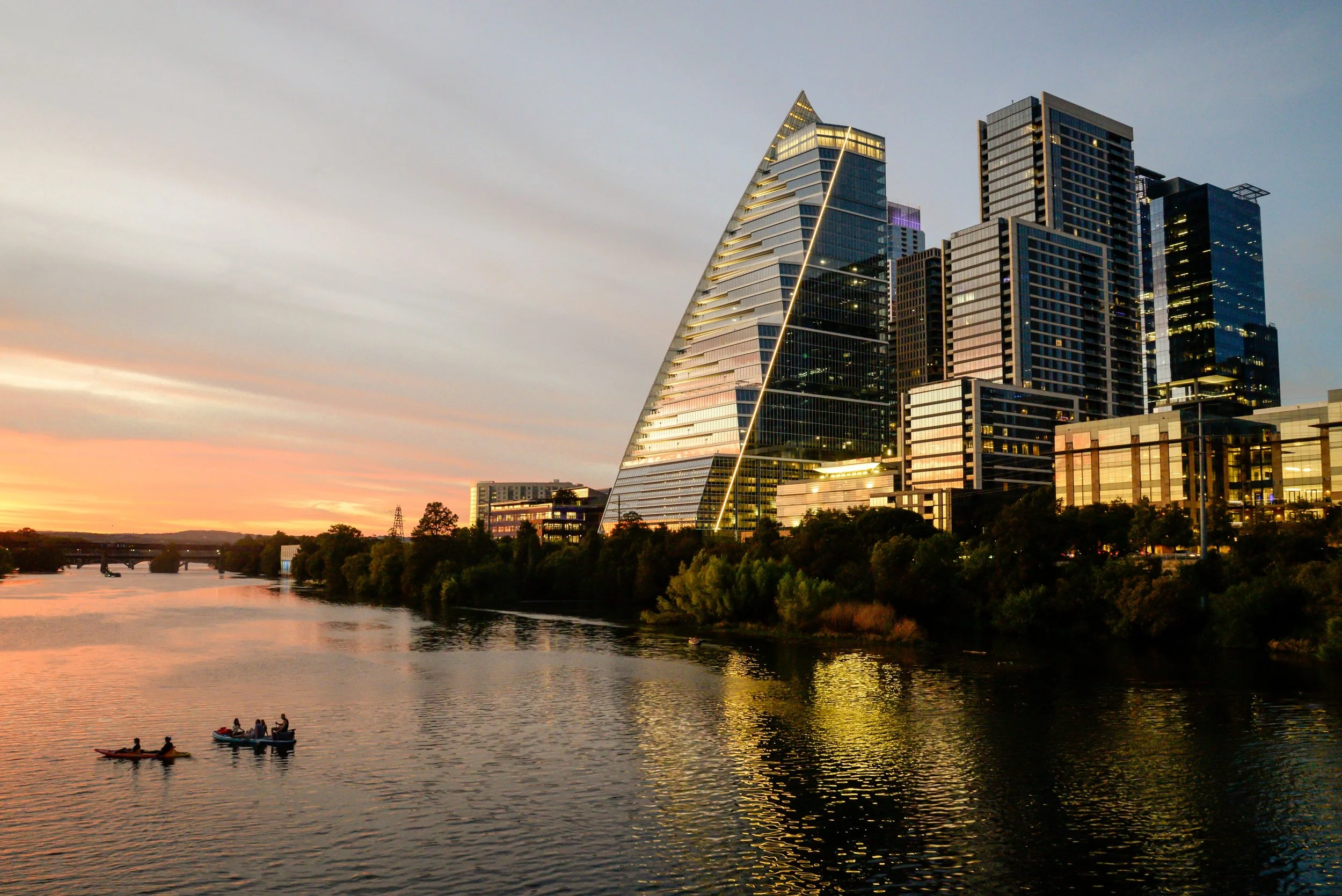
Austin moves at a fever pitch, but the PARLO woman knows that true power is found in the ability to regulate that rhythm. In a city that rewards the hustle, we choose the linger.
When the scorecard hits the bag, the day doesn’t "over"—it enters its most important phase. We refuse to treat the afternoon as a race to be won. We move toward the water, toward the open-air patios, toward the conversation that has nothing to do with quotas. We understand that recovery is not a pause in the game—it is the game.
In a landscape that constantly demands more, we prioritize the spaces that allow us to exhale. When the city lights begin to hum, we don't rush toward the next obligation. We stay, we savor, and we remember that legacy is not measured by the speed of your climb, but by the quality of the stillness you create for those coming up behind you.
THE AUSTIN PALETTE
-

LIGHT
-

TEXTURE
-
PACE
-

EMOTIONAL TONE
AFTER-ROUND RECOMMENDATIONS