chicago
BUILT IN PUBLIC
Greatness lives in the city itself.
field notes
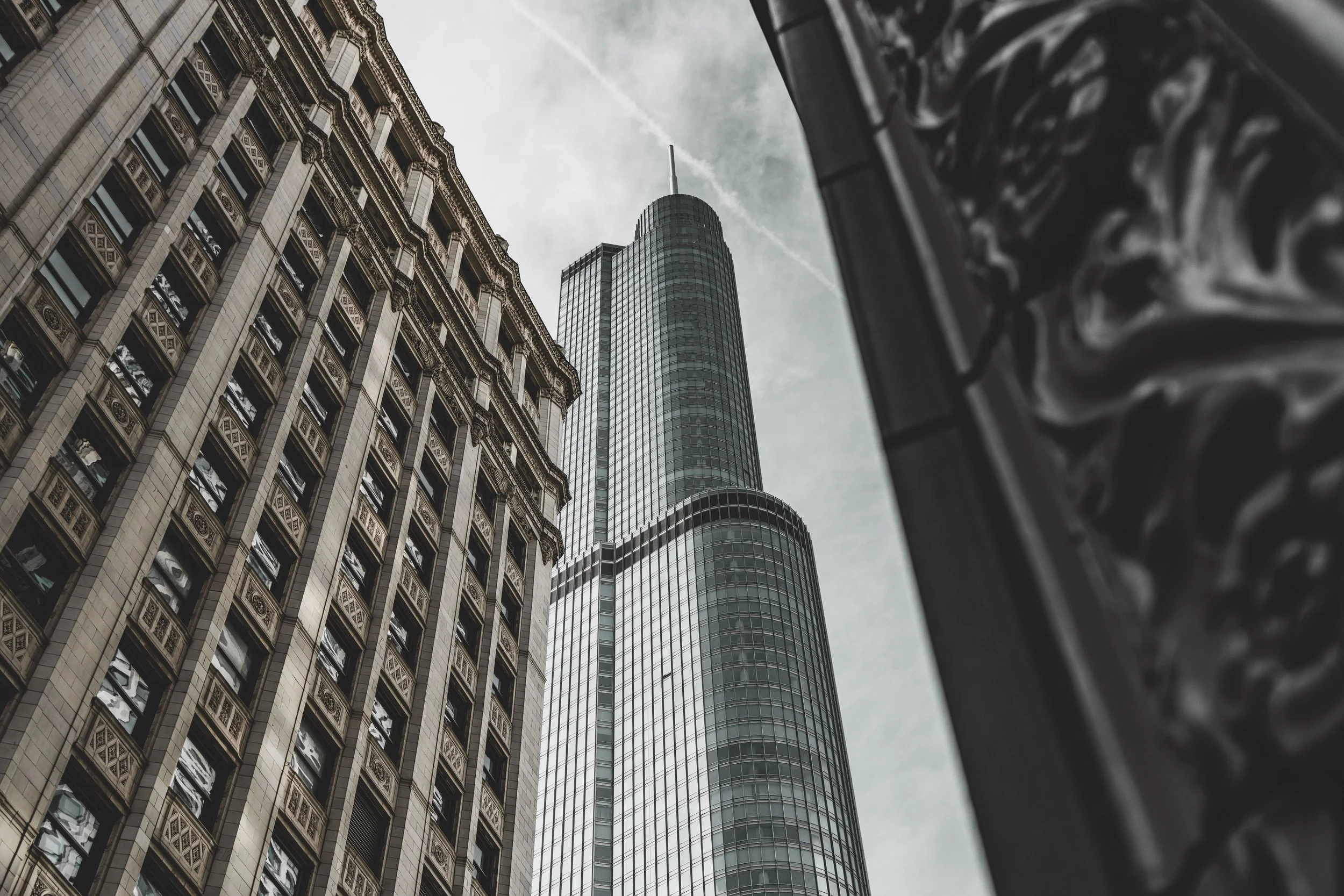
Chicago teaches you to look up.
The skyline has a way of pulling your eyes toward possibility before quietly returning your attention to the ground beneath your feet. Steel climbs confidently into the clouds while the lake stretches endlessly beside it, reminding you that ambition and humility have always occupied the same block. Few cities understand scale like Chicago. The buildings are monumental. The parks are expansive. The neighborhoods carry entire histories within a few square miles. Yet the city never feels interested in spectacle for its own sake. Everything here was built to be used.
That philosophy extends onto the golf course.
The land isn't precious. It is purposeful. Lake Michigan shapes the wind before it ever reaches the fairway. Prairie grasses bend without apology. Trees stand where they've always stood, unconcerned with aesthetics alone. Even the city's municipal courses carry themselves with a certain confidence. They don't ask whether they belong in the conversation. They already know.
Playing golf in Chicago means learning to trust your adaptability. The weather changes quickly. The breeze coming off the lake refuses prediction. One round might feel generous while the next demands patience and imagination. You learn to stop resisting conditions and begin responding to them.
Chicago rewards women who can think and feel at the same time.
The city has always admired builders. Architects. Organizers. Artists. Athletes. Women who understand that excellence is rarely accidental and almost never solitary. Around here, the strongest foundations aren't poured in concrete first. They're built through relationships, neighborhoods, and the belief that public space belongs to everyone willing to care for it.
For the PARLO woman, Chicago becomes a study in visible confidence. Nothing asks you to become smaller here. The city invites you to occupy space fully, trusting that substance will always outlast performance.
BUILT IN PUBLIC
Chicago's greatest ideas have unfolded on sidewalks, in neighborhood parks, on basketball courts, in public schools, along the lakefront, and inside communities that understood access wasn't something to wait for—it was something to create.
Black Chicago has always known this. The story of Bronzeville is one of imagination. Families arriving during the Great Migration transformed entire neighborhoods into centers of Black commerce, architecture, music, politics, athletics, and intellectual life. The city became a blueprint for what Black possibility could look like when the community invested in itself.
That same spirit echoes across Chicago's athletic landscape.
Long before golf became fashionable in wellness culture, Black golfers found ways to build community through public courses and municipal leagues. The game became another place to exchange knowledge, mentor younger players, and create opportunities that reached far beyond the scorecard.
Today, Black women and Black queer women continue that tradition in ways that often escape the headlines. They organize outings that become professional networks. They teach beginners without gatekeeping the game. They create environments where technical instruction exists alongside friendship, creativity, and joy. The golf itself matters, but so does everything surrounding it.
That's Chicago.
Culture isn't protected by exclusivity. It expands because people keep contributing to it.
Perhaps nowhere is that more visible today than the Obama Presidential Center rising in Jackson Park. More than a presidential campus, it represents a new civic landmark rooted on the South Side—a place where architecture, public space, education, art, athletics, and democracy belong to the same conversation. It reminds us that the most meaningful monuments aren't built to separate people from one another. They're designed to bring people into relationship with each other.
That feels deeply familiar.
As Black women—and especially as Black queer women—we have always understood that the real institution is the one we build together.
the after-round standard
In Chicago, recovery begins by staying in the city.
The clubs go back into the trunk, but the day is nowhere near finished. You wander through Hyde Park before dinner. Walk the Riverwalk while the skyline reflects across the water. Spend an hour inside a museum because no one is waiting for you to leave. Recovery isn't retreating from the city. It's allowing the city to continue revealing itself.
For the PARLO woman, Chicago offers a different relationship with ambition.
This is a place where excellence and humanity are expected to coexist. Nobody asks you to choose between being intellectually curious, creatively expressive, physically competitive, and deeply connected to your community. The city has always held those identities together.
The best after-round moments happen over beautifully prepared meals where conversation lingers long enough to become reflection. They happen beside Lake Michigan as the evening light softens the skyline. They happen walking through neighborhoods whose architecture reminds you that beauty becomes more powerful when it belongs to everyone.
PARLO studies those transitions because they reveal something larger than hospitality.
They remind us that restoration doesn't always require silence.
Sometimes it sounds like jazz drifting out of an open doorway. Sometimes it looks like children playing in Jackson Park. Sometimes it is simply another Black woman recognizing you across the room before either of you says a word.
Women often leave Chicago carrying more than memories of great golf.
They leave believing a little more deeply that the strongest things we build are the ones we choose to share.
the chicago palette
-
light
-
texture
-
pace
-
emotional tone
AFTER-ROUND RECOMMENDATIONS